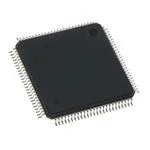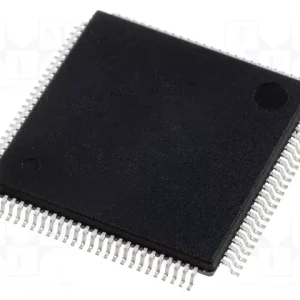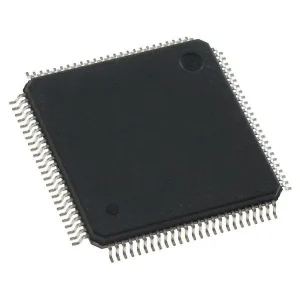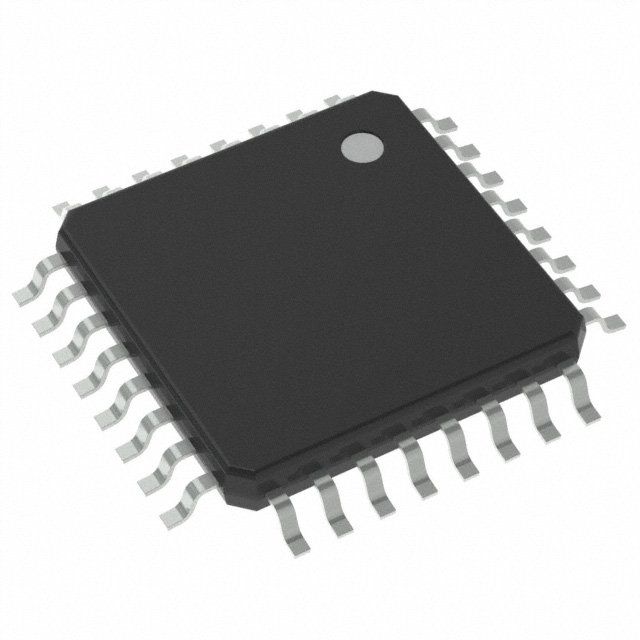
ATMEGA328P-AU
8-bit AVR microcontroller.
Product Description
Port B is an 8-bit bi-directional I/O port with internal pull-up resistors (selected for each bit). The Port B output buffers have symmetrical drive characteristics with both high sink and source capability. As inputs, Port B pins that are externally pulled low will source current if the pull-up resistors are activated. The Port B pins are tristated when a reset condition becomes active, even if the clock is not running. Depending on the clock selection fuse settings, PB6 can be used as input to the inverting Oscillator amplifier and input to the internal clock operating circuit. Depending on the clock selection fuse settings, PB7 can be used as output from the inverting Oscillator amplifier. If the Internal Calibrated RC Oscillator is used as chip clock source, PB7…6 is used as TOSC2…1 input for the Asynchronous Timer/Counter2 if the AS2 bit in ASSR is set.
Key Features
High Performance, Low Power AVR® 8-Bit Microcontroller Family
Advanced RISC Architecture
̶ 131 Powerful Instructions – Most Single Clock Cycle Execution
̶ 32 x 8 General Purpose Working Registers
̶ Fully Static Operation
̶ Up to 20 MIPS Throughput at 20MHz
̶ On-chip 2-cycle Multiplier
High Endurance Non-volatile Memory Segments
̶ 4/8/16/32KBytes of In-System Self-Programmable Flash program memory
̶ 256/512/512/1KBytes EEPROM
̶ 512/1K/1K/2KBytes Internal SRAM
̶ Write/Erase Cycles: 10,000 Flash/100,000 EEPROM
̶ Data retention: 20 years at 85°C/100 years at 25°C(1)
̶ Optional Boot Code Section with Independent Lock Bits
In-System Programming by On-chip Boot Program
True Read-While-Write Operation
̶ Programming Lock for Software Security
QTouch® library support
̶ Capacitive touch buttons, sliders and wheels
̶ QTouch and QMatrix™ acquisition
̶ Up to 64 sense channels
Peripheral Features
̶ Two 8-bit Timer/Counters with Separate Prescaler and Compare Mode
̶ One 16-bit Timer/Counter with Separate Prescaler, Compare Mode, and Capture Mode